From pen and paper to a digital memory: where do you start?
Most hospitality businesses still run on notebooks and loose documents. Here is how you turn that into a digital memory that grows with you, without typing everything over: you photograph what you already have.
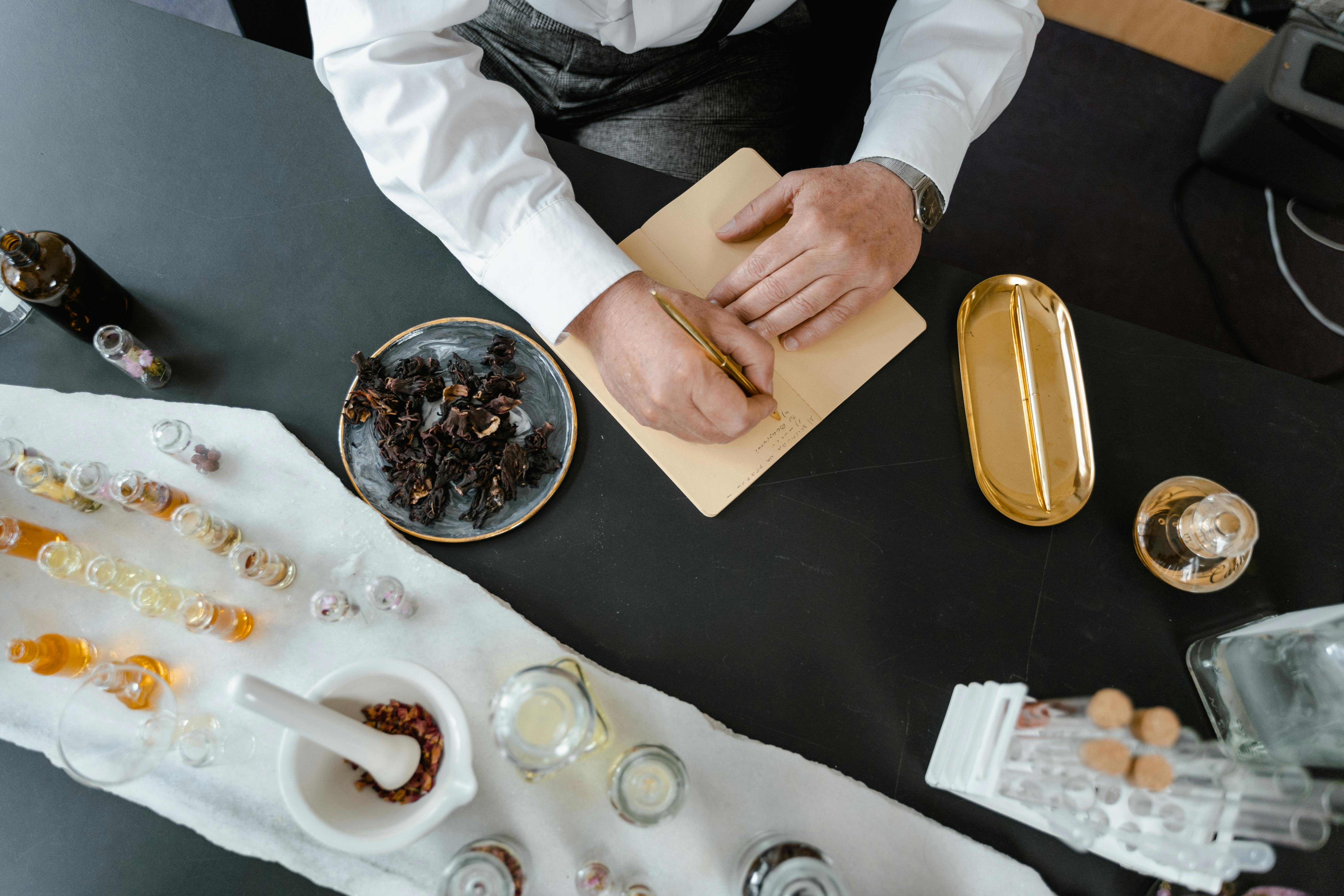
Going digital does not start at the till. It starts with the knowledge and the processes that now live on notes, in notebooks, and in people's heads, because that is the part you lose and the part that pays off most the moment it sits in one place. And the good news: you do not have to type it all over. You photograph it. Below you will read why you would do this, where you start, and how your venue ends up with a memory that grows with it.
Why you do not start at the till
Most hospitality businesses run on nothing digital yet. The Nationale Horeca 2.0 Onderzoek 2025 found that 89.4 percent of hospitality businesses still work with pen and paper for their internal administration. The till is usually already digital, but it only tells you what was sold. It does not know how a dish is made, what it costs, what was agreed with a supplier, or how the previous shift left the place.
That is exactly the knowledge that keeps your venue running, and exactly what is disappearing bit by bit right now. A notebook goes missing. A printed recipe yellows in a drawer. The agreement with the neighbours sits in the head of someone who will be working somewhere else next month. Starting at the till solves none of that. Starting with the knowledge does.
Why you would do this
Going digital is not a goal in itself. It is about what it gives you back, and that is concrete:
- You lose less. Knowledge that sits in one place does not walk out the door when someone leaves. In a sector with annual turnover around 40 percent (ABN AMRO, 2019), that is not a detail.
- New colleagues get up to speed faster. If the answer is written down somewhere, it does not have to be repeated out loud shift after shift.
- You get a grip on your margin. Once your recipes are the source, you know what a dish costs and what you keep from it, without sitting down to calculate in the evening.
- You are ready for an inspection. Whoever is on when the inspector walks in can show that the work was done.
- You get called less on your day off. The questions your team calls you for now, they can answer themselves once the answer is written down somewhere.
In short: your venue becomes less dependent on who happens to be working that day, and less dependent on what is in your head.
The first step: photograph what you already have
The biggest barrier to going digital is the idea that you have to type everything over. You do not. The first step is simple: take photos of what is already lying around.
- The notebooks on the pass and the loose notes by the till.
- Your printed recipes, including the versions with pen scratched through them.
- The labels on the tubs and the use-by dates someone wrote down in marker.
- The invoice from your greengrocer or your wine importer.
You do not have to make anything pretty. A photo with your phone is enough, even with coffee stains on the paper. What is handwritten gets read. What sits in an old folder comes out. The messy reality of your venue is exactly the input, you do not have to clean it up first.
Alongside photos, you hand over what you already have digitally, in whatever form it happens to be in: a Google Doc with your recipes, a PDF with the house rules, an export from another app you currently use for your recipes. Most of the work after that we do. You collect and hand over, we make sure it ends up structured in moonies. So you do not start with an empty system you have to fill for months, but with what you already have.
Three parts, three kinds of knowledge
What ends up in moonies falls into three parts. They belong together, but it helps to see the difference, because each part solves something else.
- Recipes: the source. A recipe in moonies is not just a list of ingredients, but also a photo and how you plate it, so every colleague makes the same plate. It is structured data, and that is why more rolls out of it right away: the cost price and margin of the dish, and the allergens. Those follow from the recipe itself, so they are correct the moment the recipe is correct. No more separate allergen list lagging behind the menu. This is the Kitchen module.
- HACCP: demonstrably safe work. This is not free knowledge but recurring work: temperatures, cleaning, and checklists you tick off per shift. The difference from a paper list is the proof. Every tick gets a timestamp and a name, so at an inspection you can show the work was really done, not just that a schedule hangs on the wall. This is HACCP.
- Memory: everything else that keeps your venue running. Everything that does not fit in a recipe or a checklist and now only sits in heads and notebooks. The ways of working, the agreement with the neighbours, the number of the fridge engineer, the handover per shift. Free, searchable knowledge you find back in seconds in the middle of the shift. This is the Memory module.
In short: recipes are the source under your cost price and allergens, HACCP is the demonstrable proof that you work safely, and the memory is the loose knowledge that keeps your venue running. An invoice photo belongs to the first part: you take a photo of your invoice, moonies links the prices to your recipes, and you see straight away what a dish costs. Without a supplier integration that only works with the big wholesalers. A photo is enough, whether you buy from that small grower or the importer around the corner.
Your memory grows with you
The first stack of photos is the beginning, not the end. A digital memory is not something you fill once and then leave. It grows with your venue.
Every agreement you add, every way of working that changes, every handover at the end of a shift makes the memory more complete. And because handing things over is so low-effort, it actually stays up to date. You do not have to open a document for it: you take a photo or hand over what you already have.
That keeps working as the form of your knowledge changes. Right now you photograph notebooks and invoices. Soon you will just as easily hand over a screenshot of a message or a WhatsApp that comes in: a change to an order, a request for a group dinner, an arrangement that passes by through the app. Messages like that sink into a chat now and are unfindable a week later. If you hand over a screenshot, it becomes part of the memory instead of something you half remember later.
That way you are not building an archive that ages, but a memory that gets a little more complete and current every shift.
Where to start, in order
You do not have to do everything at once. A workable order:
- Start with your recipes. That is the knowledge with the most value and the clearest structure. Once your recipes are in moonies, you immediately have the basis under your cost price and your allergens.
- Then lock down your food safety. Temperatures, cleaning, and checklists become tickable per shift, with proof you can show at an inspection.
- Build your memory in the meantime. Every agreement, way of working, and handover you add is there the next time someone needs it.
The point is not that you are off paper in a single weekend. The point is that you start with the first stack of photos, and that from that moment every photo is something you find back instead of lose.
Frequently asked questions
Where do I start if I want to digitise my venue? Not at the till, but with the knowledge that now sits on paper and in heads: your recipes, your ways of working, your agreements. Start by taking photos of what you already have and hand over your existing documents. That is the first step, and most of the work after that is done for you.
Why would I do this? Because it means you lose less knowledge to turnover, get new colleagues up to speed faster, get a grip on your margin, are ready for an inspection, and get called less on your day off. Your venue becomes less dependent on who happens to be working that day.
What is the difference between recipes, HACCP, and the memory? Recipes are the source under your cost price, margin, and allergens. HACCP is the demonstrable proof that you work safely, with tickable tasks and a timestamp. The memory is all the loose knowledge that does not fit in a recipe or checklist: ways of working, agreements, numbers, and the handover per shift.
Do I have to type all my recipes and data over? No. You photograph what is lying around, including handwritten notebooks and printed recipes, and you hand over what you already have digitally, as a Google Doc, PDF, or export from another app. moonies sets it up structured for you.
Does the memory grow along as my venue changes? Yes. You keep handing things over simply: a photo, a document, and soon a screenshot of a message or WhatsApp too. Every handover and agreement you add makes the memory more complete and current.
Where moonies fits
moonies is built for exactly this step: from pen and paper to a digital memory, without starting an IT project. You photograph what you have, we set it up, and you get three things back that hang together. Your recipes with cost price and allergens, your food safety that is tickable and demonstrable, and the memory of your venue that grows with you and where your team finds the answers.
No till, no bookkeeping, no supplier integrations you have to switch on. Just the knowledge that keeps your venue running, in one place, that stays with the venue even when someone leaves. You can read more about that in capturing knowledge through staff turnover.
Want to know what it costs? The pricing page shows it, with no surprises. And if you just want to start: gather your first stack of photos, and we will make sure everything ends up in moonies.