HACCP for restaurants: what is required and what the NVWA checks
What HACCP means for your hospitality business: the hygiene code, temperatures, records and the Dutch NVWA inspection. Every rule and number in one place, no jargon.
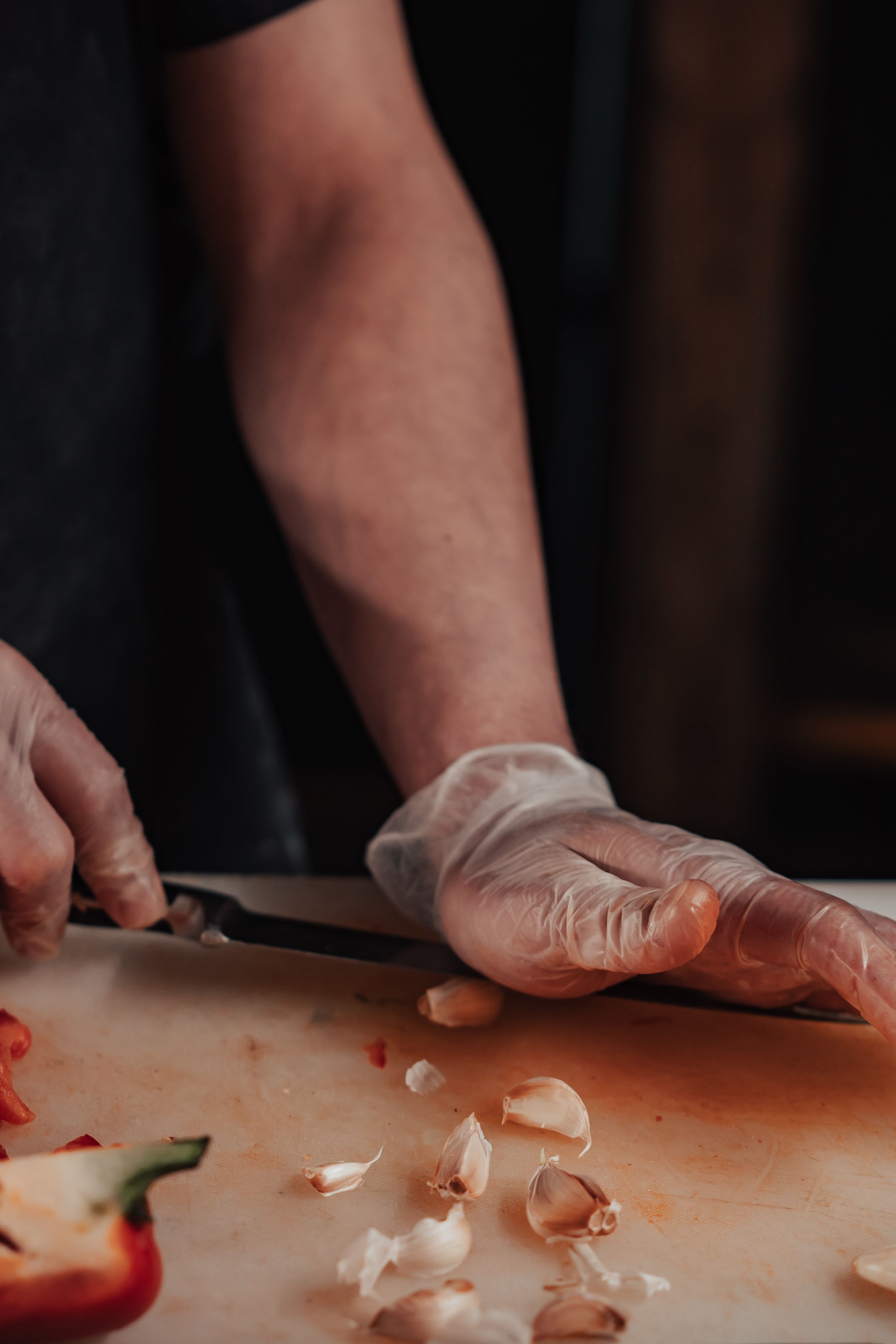
The moment you prepare or serve food, you fall under food-safety law. HACCP is not a certificate you earn once and forget. It is how you show, every shift, that you handle food safely. In the Netherlands the NVWA checks this, unannounced, and publishes the verdict online.
That sounds heavier than it needs to be. Most hospitality businesses meet HACCP by working to a ready-made hygiene code, not by writing a thick plan of their own. But you do have to be able to show it: which temperatures you measure, when you last cleaned, what you checked when a delivery came in.
Below is what HACCP actually is, what is required, which numbers matter, and how an NVWA inspection works. Each part links to the official NVWA explanation, so you can always read the source yourself.
This article was written in July 2026 and describes the rules as they stood at that time. Rules and amounts change; for the current state of play, always check the NVWA's food safety pages.
What HACCP is, and why it exists
HACCP stands for Hazard Analysis and Critical Control Points. The NVWA describes it as a mandatory system that helps you work with food safely and hygienically. You map out where in your process something could go wrong, from delivery to plate, and you record how you control those risks. See the NVWA on HACCP.
The method rests on seven principles: identify the hazards, find the critical points in your process, set limits (a maximum temperature, for example), check that you stay within them, act when something goes wrong, verify that the system works, and document all of it. The full explanation is on NVWA, working to the HACCP system.
The legal basis is European: Regulation (EC) 852/2004 on the hygiene of foodstuffs requires every food business to work with a HACCP system. In the Netherlands this is worked out through the Commodities Act (Warenwet), in particular the Commodities Act Decree on the hygiene of foodstuffs. That national layer is why you may work to an approved industry code instead of your own plan, more on that below.
Is HACCP required in hospitality?
Yes. HACCP applies to any business that works with food: a restaurant, a bar serving snacks, a lunchroom, a food truck, a caterer. The moment you prepare or sell food or drink, you are covered. A changing menu or a small team makes no difference.
Before you open, you also have to register with the NVWA as a food business. That follows from Article 6 of the same European regulation. Registration is done digitally through MijnNVWA, you need your Chamber of Commerce (KVK) registration and a login, and it is free. You confirm your details once a year afterwards. See NVWA, register your food business.
Just starting out? The NVWA has a step-by-step plan for new businesses that walks the whole route, from KVK and registration to the first inspection.
A hygiene code or your own food-safety plan?
You do not have to write your own HACCP plan. The NVWA lets you work to an approved hygiene code for your industry. In their words: if you work to an approved hygiene code, you meet your legal duty to use a HACCP food-safety plan. See NVWA, food-safety plan or hygiene code.
For hospitality that is the Hygiene Code for the Hospitality Industry from Royal Dutch Hospitality (KHN). The NVWA has approved it, and it describes exactly how to work safely, including the forms you need to keep. Through the KHN shop it costs 110 euro excluding VAT, and 40 euro for KHN members. More on KHN, the hygiene code.
One misconception worth clearing up right away: you do not need a HACCP certificate or diploma. Plenty of courses exist, and they can be useful, but the law does not ask for a piece of paper. What the NVWA wants to see is that you know the rules and apply them, demonstrably.
What you have to record
This is the part an inspection turns on. The rules are not complicated, but they take discipline: measure, and log the measurement. The main parts.
Temperatures
Temperature is the core of food safety. The NVWA uses these limits (see HACCP rules in the kitchen):
| What | Limit |
|---|---|
| Chilling (perishable food) | 7°C or lower |
| Freezing | -18°C or lower |
| Reheating from raw (core temperature) | 75°C or higher |
| Reheating cooked food | 60°C or higher |
| Keeping warm (bain-marie, hot cabinet) | 60°C or higher |
| Cooling down after heating | below 7°C within 5 hours |
Note: if the label carries a storage instruction, for example "store at 4°C", that is what applies and you keep to the lower temperature. The 7°C is the general upper limit, not a target to aim for. Measure your fridges and freezers regularly, and log the measurement. If something falls outside the limit, note what you did about it too.
Cleaning and cross-contamination
You prevent cross-contamination by keeping raw and cooked separate. The NVWA asks you to store cooked food above raw food in the fridge, to clean utensils properly before cutting a different ingredient, and to clean and disinfect at fixed moments. A cleaning schedule you sign off is part of that. The practical rules are on the same NVWA page on clean and safe working.
Personal hygiene sits here too: washing hands with soap and warm water at the obvious moments, clean work clothes and closed shoes, keeping nails short and unpainted, and covering a cut with a waterproof blue plaster.
Keeping pests out
You have to keep pests out of every space where you work with food or store it. That means keeping things clean, storing food sealed, closing gaps (the NVWA names a maximum of 0.5 cm) and managing waste well. The approach is called integrated pest management: prevent first, and only bring in a professional when problems persist. Pests are not a minor matter. They are one of the reasons the NVWA can close a business on the spot. See NVWA, keeping pests out.
Shelf life and labelling
Know the difference between the two dates. "Use by" (te gebruiken tot) is on highly perishable products: after that date it is unsafe and you may not use or sell it. "Best before" (ten minste houdbaar tot) is about quality: after that date it may decline, but it is not automatically unsafe. Date your own prepared and opened products, so you know how long they can still be used. The explanation is on NVWA, shelf-life date of foodstuffs.
Traceability
You have to know which supplier each product came from, so a product can leave the kitchen fast if there is a problem. For a restaurant that comes down to keeping delivery notes and invoices and doing a check on receipt. The basis is in European food law. See NVWA, setting up a traceability system.
Allergens
You must always be able to inform guests about 14 allergens, in writing or verbally with a written basis to hand. This is a topic on its own, which we covered separately in restaurant allergen management: an allergen list that is always right. The official explanation is on NVWA, allergens in hospitality.
Keep your records, so an inspection can be traced back. The NVWA has its own Food-safe working checklist you can run through weekly, for example.
The NVWA inspection: how it goes
An inspection in hospitality is unannounced, and you are required to cooperate. There is no fixed frequency; the NVWA works risk-based. An inspector looks at, among other things, whether you work to a hygiene code or food-safety plan, whether it is clean and intact (ceilings, walls and floors included), whether pests are kept out, what the fridge temperatures are, whether products are dated properly, and whether your staff really know the allergens. Sometimes the inspector takes a sample. See NVWA, inspections in hospitality.
What happens when something is wrong runs up a fixed ladder: first a warning, then a report of findings with a fine or other measure, then, after three or more serious violations within two years, intensified supervision, and, where there is immediate danger, an (emergency) closure. Fines stack per violation. How that enforcement policy works is on NVWA, how an inspection works.
And then there is the visibility. The NVWA publishes hospitality inspection results online, with name and address, and a verdict: "Complies", "Points for improvement found" or "Intensified supervision". Anyone can look it up. See the explanation on NVWA, hospitality inspection results and the public search tool itself.
Why paper lists tend not to hold up
The rules are doable. Keeping them up is the hard part. On a busy night a temperature list is the first thing to slip, to be filled in from memory after closing. A folder of cleaning schedules goes missing, or turns out half empty when the inspector asks for it. A list filled in afterwards is exactly what an inspector recognises, and it is weaker evidence than a measurement logged at the time.
That is the real problem with paper: it does not know when you filled it in, and it does not know who did. A record with a date, a time and a name attached is not only easier to find, it is also more credible.
Staying on paper for now? Then at least put the records in a fixed routine, so they happen at the same moment every shift. Make a printable start with our free opening and closing checklist maker, and read how to build that routine in the opening and closing checklist for your venue.
Keeping HACCP in moonies
In moonies, HACCP is its own part, in the same place your team already works. No separate app to forget, no paper lists to lose. You record what the NVWA wants to see:
- Temperatures. You log fridge and freezer temperatures daily or per check. If something falls outside the limit, you see it straight away.
- Cleaning. Cleaning lists per area (kitchen, bar, toilets) get ticked off on the phone, with a name and time attached.
- Control points. Goods received, core temperatures and shelf life are logged at the moment itself, not from memory afterwards.
And when the NVWA is at the door, they want to know what was done, when and by whom. In moonies that is recorded with a date, a time and a name, and you show it in a few clicks. No hunt through folders and notebooks. The final responsibility stays with you, of course, but the recording and the retrieval are off your plate.
Want to see how that works? Take a look at the HACCP part of moonies, or check the pricing page for what it costs. You can take HACCP on its own, or together with the kitchen where recipes and allergens come together.
Frequently asked questions about HACCP in hospitality
Is HACCP required in hospitality? Yes. Any business that prepares or sells food or drink has to work to HACCP, demonstrably. Most hospitality businesses do this through the Hygiene Code for the Hospitality Industry, so they do not have to write their own plan.
What is the difference between HACCP and the hygiene code? HACCP is the method: identifying and controlling risks. The hygiene code is the ready-made, NVWA-approved plan of the industry. Work to the code and you automatically meet the HACCP duty.
Do I need a HACCP certificate or diploma? No. A certificate is not legally required. You have to know the rules and apply them, demonstrably. Courses can help, but the NVWA checks compliance, not a diploma.
How often does the NVWA inspect a hospitality business? There is no fixed frequency. Inspections are always unannounced and risk-based. A serious violation is followed by a re-inspection, and repeated ones by intensified supervision.
What temperature should a fridge in hospitality be? Perishable food is kept at 7°C or lower. If the label states a lower temperature, that applies. Freezers stay at -18°C or lower, and hot dishes are kept above 60°C.
How long do I have to keep my HACCP records? Keep your temperature, cleaning and control logs long enough that an inspection can be traced back. In practice businesses keep this for at least a year, in line with the hygiene code.
Can I keep HACCP digitally? Yes. Digital records are allowed and often stand stronger at an inspection than a paper list filled in afterwards, because the time and the name are logged automatically.
Sources
- NVWA, HACCP and working to the HACCP system
- NVWA, food-safety plan or hygiene code for hospitality
- NVWA, HACCP rules in the kitchen (temperatures, hygiene, cross-contamination)
- NVWA, keeping pests out
- NVWA, shelf-life date of foodstuffs
- NVWA, setting up a traceability system
- NVWA, register your food business
- NVWA, inspections in hospitality and how an inspection works
- NVWA, hospitality inspection results (publication) and the public search tool
- NVWA, Food-safe working checklist and the step-by-step plan for new businesses
- KHN, the Hygiene Code for the Hospitality Industry
- Regulation (EC) 852/2004 on the hygiene of foodstuffs